

Music can help some dogs settle, but the volume, variety, context and your dog's response matter more than a single perfect playlist.
Yes, music can help some dogs relax. Research and shelter observations suggest that classical music, soft rock and reggae may support calmer behaviour in some settings. The effect is not universal, and it can fade when the same sound repeats for too long. Your dog's body language is the useful answer.
Music works best as one part of a comfortable routine: exercise suited to the dog, a safe resting place, predictable departures and help for any underlying anxiety. It is background support, not a promise that a distressed dog will suddenly feel fine alone.
What kind of music is calming for dogs?
Start with music that is steady, moderate and free from sudden changes. Studies summarized by the American Kennel Club have found calmer responses around classical music and, in some shelter research, reggae and soft rock. Heavy metal produced more agitated behaviour in one cited study. That does not mean every classical track is calming or every dog prefers the same genre.
• Choose a slow or moderate tempo with a predictable rhythm.
• Avoid tracks with abrupt volume changes, sharp percussion or frequent alarms and doorbells.
• Keep the volume low. A dog's hearing is sensitive, and louder is not more soothing.
• Use a varied playlist. Repetition may reduce the effect as a dog becomes accustomed to the sound.
• Try familiar household audio too. Some dogs settle better with ordinary radio, conversation or the sounds they hear when you are home.
How to test a playlist with your dog

Test the sound while you are still at home. If music only begins at the moment you leave, it can become another departure cue. Play it during calm, ordinary moments first.
Choose a time when your dog is already fed, comfortable and ready to rest.
Play 20 to 30 minutes at a low volume from a speaker outside the dog's immediate resting space.
Watch for relaxed signs such as choosing to lie down, softer facial muscles, normal breathing and ordinary sleep.
Stop or change the sound if you see pacing, panting without heat, trembling, scanning, repeated vocalising, hiding or attempts to escape.
Repeat on another day with a different style. One calm afternoon does not prove that the playlist will help during an absence.
A home camera can help you compare what happens after you leave. Look for the overall pattern: whether your dog settles, how long it takes and whether distress increases. Do not judge the playlist only by the first minute.
A practical home-alone sound routine
• Before leaving: meet your dog's normal exercise and toilet needs without exhausting them.
• Set the environment: comfortable temperature, fresh water, a familiar bed and safe enrichment appropriate for your dog.
• Start the audio early: let it become part of the room before departure.
• Keep departures neutral and predictable rather than stretching out the goodbye.
• Use monitoring: check whether the dog rests or shows continuing distress.
• Change the plan if needed: sound cannot compensate for an absence that is longer than the dog can comfortably manage.
Music is not a treatment for separation anxiety
A dog who barks occasionally at outside sounds is different from a dog who panics when left. Repeated howling, destruction around exits, toileting despite being house-trained, drooling, shaking, frantic pacing or escape attempts can indicate separation-related distress. Speak with a veterinarian or qualified behaviour professional. Medical issues and noise sensitivities can overlap with behaviour.
The RSPCA also recommends enrichment that gives animals safe opportunities to sniff, forage, chew, investigate and make choices. Pairing low-volume sound with suitable enrichment may make the environment more interesting, but any food toy or chew should be tested under supervision before it is left with a dog alone.
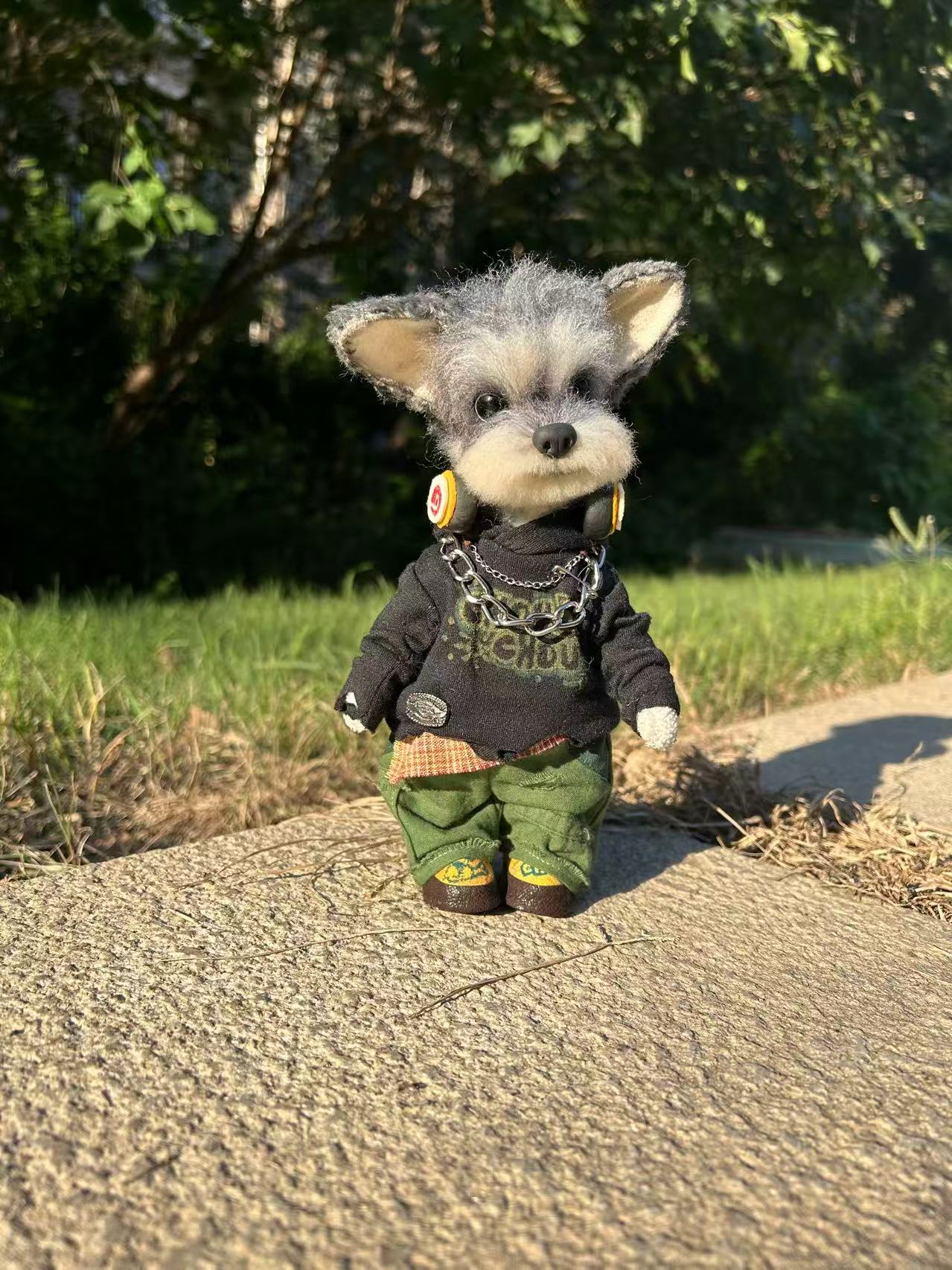
Why this character wears headphones
For this Holdable piece, music was more than a decorative theme. It was a habit the dog and owner shared — part of the feeling of being together at home. The handmade character turns that relationship into a visual detail: headphones, a relaxed outfit and a familiar face.
A good character detail does not say only what a pet looks like. It remembers what life with them feels like.
The headphones belong on the character, not on the real dog. The story creates a keepsake; the care advice stays grounded in what is comfortable and safe for the animal.
Frequently asked questions
Should I leave music on for my dog when I go out?
You can try low-volume, steady music if your dog appears relaxed around it. Introduce it while you are home and use a camera to see whether it actually helps after you leave.
Do dogs prefer music or silence?
Preferences vary. Some dogs rest with music, radio or familiar voices; others prefer a quiet room. Compare behaviour rather than assuming every dog needs sound.
What music is best for dogs home alone?
Classical music, soft rock and reggae have shown calming effects in some studies. Choose steady tracks at a low volume and vary the playlist to reduce habituation.
Can music stop separation anxiety?
No. Music may soften the environment, but separation anxiety can require a structured behaviour plan and veterinary guidance.
How loud should calming music be for a dog?
Keep it at a low, comfortable background level. If it competes with normal conversation or the dog moves away, lower it or turn it off.
Sources and further reading
• American Kennel Club — Why Music Is Therapeutic for Dogs
• RSPCA Australia — Low-Cost DIY Enrichment for Cats and Dogs
• RSPCA Queensland — Separation Distress in Pets
• Associated Press — What Science Says About Music and Dogs
PUBLISHING CHECK: Confirm the music-related owner story and the pictured dog's name before adding a personal quote or specific listening habit. The current copy states only the approved editorial premise.
PET STORIES · FROM AI CONCEPT TO HANDMADE ART